30 November 2015

Vignette: Disillusionment

Is it fruitless to search out what is truth and falsehood? To piece together the world into a coherent picture that accommodates the collective experiences of humanity into a comprehensible whole? No sooner does one come to terms with one conundrum that another appears. In the tiresome quest for understanding, each worldview iteration encompasses more and thus when each comes crashing down, even more purpose and motivation is taken with it, all bound together, all removed to be built anew. But building is expensive, time-consuming and tiring.

To believe in nothing is my negation. To be paralysed by doubt is still to be paralysed. But what can a finite mind do against an infinite universe, with more knowledge and revelation coming day by day to revolutionise? Growing tired of revolution, reassessment and longing for stability in this world, stability to security, security to comfort. Is all comfort an illusion? The product of an idle, unchallenged mind?

7 November 2015

De Gloria Mundi

It's not often that games provoke reflection on a wider scale than the role of entertainment as a diversion in our lives, but Europa Universalis IV has provided quite a lot of munch on. 'All's fair in love and war', and now I am somewhat more acquainted with histories and causes the latter than I have been.

Of course, one cannot possibly hope to encapsulate all the intricacies of nations on anything processable by a domestic computer, even if Moore's law continues to push our limitations. EUIV however, does a much better job than most other games, notably the Civilisation series. Bringing in religion, geopolitics, dynastic struggles and colonisation, and revelling in the sheer inequality of it all.

When one begins a campaign, plans for aggrandisement and expansion help to drive the first hundred years or so of gameplay. You are put in the shoes of a ruler, and that drive to build something that will last, achieve domination and preeminence, becomes something relatable. 

Halfway through, if one plays aggressively, it is easy to become a virtual world power, maybe controlling the most trade, being a dominant land power, or unifying the lands of one culture group. The game suddenly loses steam, that drive to be the first gives way to a strange purposelessness. The player begins to wonder what was so appealing about achieving to begin with.

This sentiment of nihilistic disenchantment is exacerbated, when after thirty to forty hours of campaign time, everything ends abruptly in 1821. The game gives you a little pat on the back, and shows you the door. The sandbox gameplay has revealed how countries define their own goals based on their self interest, but in the end, when one considers all the circumstances, the entire exercise seems so futile, even detrimental. 

Thousands of lives were given to the service of the nationalistic dream, whether than dream was centred around the Valois or the Ming. Alliances are forged and broken when convenient with a perfunctory swiftness. Then as we know from history, European hegemony came crashing down, in a great destructive debacle where the flags of many empires flew for the last time over people who could no longer naively endorse the casus belli of their rulers. 

In that age is was easy to believe in the power and vision of a king, but events have conspired to deconstruct that lie. In its wake we came up with new reasons to fight, new causes to champion, new ideas to die for. The modern world has saturated itself with glories even more transient and fleeting than the legacy of the Habsburgs or Pax Britannia, and we buy into them because we need something to buy into, but Empire is so last century. I suppose it's time we turn to more eternal goals to strive for.

Sic Transit Gloria Mundi, Sed Non Transit Gloria Dei

28 October 2015

Hubris

I feel quite shaken by the level of uncertainty associated with knowledge that presents itself at a university level. After almost a semester in medicine, it has become apparent that while we write volumes on what we do know, my reference books are regularly admitting that certain mechanisms and various aetiologies of numerous conditions, esoteric and common, are rather opaque to us. There are even occasional inconsistencies between sources, which does nothing to assuage my fears that academia in general is in danger of building castles upon castles in the cloudy skies above the ivory tower.

It ought to be exciting, that we know so little, because it speaks of the possibilities out there, the research to be conducted, the potential applications and miracle cures that might present themselves upon the successful comprehension of various pathways.

Yet, it seems as though these vast unexplored regions of undiscovered knowledge have been cached in a collective wilful ignorance. Only a select few peer out over these shadowy realms and tremble at its inexhaustible expanse, the rest have come to believe that someone else always has the answers.

Perhaps it is a consequence of specialisation, coupled with the socha of modern life. Professionals want others to believe that they have all the answers, as part of earning the trust of the majority who entrust their information, assets and occasionally, their very lives to those who are likely complete strangers. Society interrogates their professionals with the question: 'You know what has to be done, right?'

Often, we can confidently answer that yes, we do know how we can help. This has unfortunately led to the perception that we have, collectively, got all the answers. That, in turn, has led to terribly high expectations and to the readiness at which we interpret mistakes as malevolent manipulation of some secret gnosis.

We want to believe that we know enough, for as the adage goes, knowledge is power. We would like to believe that we have more control over our fates than our less informed ancestors. In truth, we ought to know that we know little, that our knowledge base is vulnerable and often incomplete, and we plug ourselves into a global system that wants desperately to conceal the fragility of its foundations. How long will it be before the pride of our modernity is irrevocably shown to be a passing illusion? The sentiment of 'sic transit gloria mundi' will undoubtedly reverberate till kingdom come.

3 October 2015

De Imagine Dei

This is going to be a fairly short article on my current understanding of what it means for God to have created us in His image.

To begin, this concept is based on the Word, and blended funnily enough, with a little bit of dimensional speculation from Flatland, by A. Square.

Then God said, “Let us make man in our image, after our likeness. And let them have dominion over the fish of the sea and over the birds of the heavens and over the livestock and over all the earth and over every creeping thing that creeps on the earth.” So God created man in his own image, in the image of God he created him; male and female he created them.
- Genesis 1: 26-27 (ESV)

What is an image? In our most frequently encountered expression of images, they are two dimensional representations of something in three dimensions. By virtue of the fact that we see things from a limited perspective, we are able to represent something of three dimensions in a recognisable fashion, even through it has much less information than what the image claims to represent.

So an image is a snapshot of something complex from a limited perspective. It is a representation of something in a lower dimension that can only exist in a higher dimension. An image of a hypercube would be a cube, that of a cube, a square, and that of a square, a line, and a line, a point. Or not. 

Depending on the angle at which the image is taken, a cube can look like a hexagon or a rectangle. A scene can be viewed from a thousand perspectives. A building, whether le tour Eiffel or the Sydney opera house, have an near infinite number of possible vantage points by which they may be reduced to an image. Some may be more familiar than others, more or less conventional, close or distant.

If we are images of God, by this analysis, God must be more complex than we are. Our most distinguishing factor as human beings is that we are personal. We have the ability to form personal relationships with one another, and with God, in a way that the rest of natural creation cannot. What is a more complex version of personality? Father, Son and Holy Spirit.

Trinity is only possible in what is somehow an additional personal or spiritual dimension, which we are unaware of in the same way that A. Square could not, at first, conceive of a sphere. In order for God to explain Himself to us, He has to reduce Himself into relatively comprehensible expressions. Most directly, by dipping Himself into our dimension as Jesus Christ. As how the sphere appears as a circle in Flatland to be able to communicate in a limited way with his prophet.

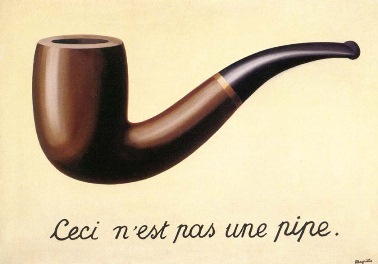
We are all made in God's image, yet we possess such diversity in our expression of that image. The analogy still holds, for a complex being like God cannot be captured in His entirety by a single image, a single human being. In His infinitude, all the billions of us who have ever existed still cannot fully capture all the ways that God can be imaged. And of course, while we may look like God when He is viewed from a certain angle, we cannot hope to be Him, any more than a picture of a pipe can be a pipe.

4 September 2015

Vignette: Mare

Evening promenade ambulations were the always the most calming. The trees lined the right and the sand on the left. The sea reached out for the shore, pursuing and receding. How many people had looked out in just this way over the centuries? Caught up in an idle thought, the germ of a reflective cascade, the bud of a mental exercise through the high-vaulted halls of philosophy.

Perhaps it takes a certain disposition to appreciate this environment. A quieter, reflective temperament with a grandiose capacity for trying to comprehend the mysteries of this world. The sentiment charmed. It repelled any thoughts of loneliness, replacing it with a profound solidarity with all those who must once have stood here, in tranquil contemplation. It was an order, implicit, a gathering of kindred spirits who meet each other not in person, in speech and actions, but in prose or verse. The records of their hearts laid bare for another sensitive soul to imbibe, empathise with, and express in yet another flourish of creativity.

On more transcendent days, it seemed that the spirit of that quiescent community was closer to the sea, the land and the sky than to any other human organisation. How many regimes, triumphs and tragedies had this sea observed? Older, older still. How many births, deaths, frustrations and elations had been absorbed into the memory of the sea? Absorbed and absolved in the sublime depths that deny any attempt at exploration. Like the subconscious of the super-consciousness of humanity, which discovers a rare listener out of every few thousand individuals, who tries to give it a voice for the next explorer. 

The exclusivity of the organisation was a source of clandestine pride, but its reality could never be certain. Perhaps such perspective was all too common, disguised in innumerable variations, lenses and distortions into the full spectrum of superficial personalities. Or perhaps it was a phantasm, an ideal borne of a romantic hope of easing isolation, one too acutely felt by asocial individuals, read into the texts and expressions of others. 

At other times, the sea lost its symbolism, snapping back to a churning body of water, unconscious, unobservant and unfeeling. It reclaimed its position as a sublime force with mastery over a presumptuous humanity. It broke its mental alliance with a callous fickleness and left the observer stranded and alone. No longer a comfort, but a font of unease.

It would not do. The observer grants his own interpretation and voice to the voiceless, and Oceanus, for all his pretences, could be neither friend nor foe to the community that personified him with recall, and attempted to co-opt into their quest for questions and answers. It was a tool, a platform from which to explore realities beyond the physical, but only as much as a mind was willing to grant it metaphysical meaning by analogies and association.

13 July 2015

A Reluctant Road

An ironic turn of events does reveal itself through the contents of my posts in recent months. When I started my creative oeuvre, it was intended to be a synthesis of all the knowledge I valued, and sensed that I wanted to include in a grand design. A world in my image, a playground of the mind, a canvas for the emotions, realm where I could create the creator and explore the implications of the rules I had set.

While writing, I researched, I thought, and my investigations began to take precedence over the actual opus itself. I had sought to reconcile multiple truths, and in that course, I found some beliefs were not worth maintaining. Veritas took precedence. Scriptio continued in ill disciplined streams.

That which I had determined to do changed. Now, the sub-creation became a vessel, centrum sapientiae scientiaeque. It had to embody the final understanding, it had to contain as much as it could possibly contain without being reality, for my perception of reality had grown to be far fuller than versatile shadow that dwelt within my soul.

I see now that I will be bound. Trapped between a journey of discovery and a process of expression, in a constant tension, I am strung. The magnum opus must concede to my own 'De Civitate Dei', 'Summa Theologiae' and 'Institutio Christianae Religionis'. Perhaps one edition will be insufficient.

1 July 2015

De Progressione Hominis

Since the age of exploration, the world has been wondering what catapulted the nations of western Europe to global dominance. We have come up with several theories, explanations for the narrative of modern history, and the fruits of those stories are evident to those who will take the time to delve further than the coasting observer. Reading the book 'Discipling Nations: The Power of Truth to Transform Cultures', I feel I finally have an answer to this enduring question which makes the most logical sense.

First, let's examine the other answers which have been submitted though, for sake of comparison. No doubt those who have lent credence will assume that my understanding of these theories from the readable books meant for the layperson are insufficient, but I ask for your toleration my amateurish philosophising. In decades past, the primary candidate for white supremacy was a biological superiority. The nations of Europe represented the cream of the human crop, the apex of evolutionary development. The Japhethites took their place in the great chain of being and had the right to exercise their ascendancy to accelerate the natural current of mother nature. We observe the terrible fruit of such a story, with hundreds of native peoples being treated as less than human, studied to determine if they represented the fabled missing link, roped into slavery and exploited as if they were included as objects of Genesis 1:28. 

The ripening of this cogitative mode was in Nazism and other similar ideologies, which seized upon the pseudoscience of nature in red tooth and claw to justify unprecedented genocides and launch a eugenics program. Now we deal with a tamed version of evolution, still distorting the way we understand the world, but not to the extreme degree which it once did. Any suggestion that human development is linked to evolutionary advantages is now met with extreme aversion, and certainly not deemed politically correct.

So now we look for alternatives, and one that had appealed to me before was suggested by Jared Diamond in 'Guns, Germs and Steel' and further elucidated by Ian Morris in 'Why the West Rules: For Now'. Their suggestions about the influence of geography and biogeography, I feel, still cannot be entirely disqualified, and have much merit. The argument, in very general brushes, is that all societies have the same baseline humans; there are no biological advantages or handicaps as a whole, and certainly not be race. It is almost the antithesis of the toxic racial theory that was once so dominant in its aversion to any mention of genetic differences among Homo sapiens.

Instead, what shaped our societies is put down to geographical differences. Europe fostered competing nation states which existed separately because of natural geographical barriers while China had long been unified because of the comparative lack of such features in the landscape. Domesticable species were far more common in the old world than the new world. The old world's horizontal axis was far more facilitative of cross pollination of ideas, inventions and trade routes than the latitudinal variation in the new world. They are really good, thoughtful books, I do recommend them.

Recently, a third perspective has helped me to understand this issue with a different take, which I figure is far more holistic than either of the last two theories. Some may take offence at the idea that biblical truth is what transforms nations and generates wealth, but the facts rather speak for themselves. Loren Cunningham's 'The Book that Transforms Nations' offers a brief overview while 'Discipling Nations' offers a heftier elucidation. This idea in essence, suggests that God intended for societies to arise, and designed them to function in a certain way. Societies that function according to those principles; such as honest government, concern for the poor, valuing individuals and so on, will thrive, in the same way that a body that is respected by being fed the right food and well exercised will be healthy. God made societies, and knows how they should work better than any of us could, and He has graciously revealed His principles for a successful society in His word. This view holds that there is an absolute truth and an absolute standard which we can either choose to abide by, or abandon.

The advantage of this view over the second is that it gives us hope. The second view is ultimately deterministic, as much of the rest of the modern cosmological evolutionary account is. It diminishes the epic turns of history and the brilliant impact of artists, inventors, scientists, entrepreneurs and missionaries on this world by attributing them, indirectly, to probabilistic chance. No doubt Newton and Leibniz both discovered calculus, but we ought to be wary of going overly fatalistic. The second view encourages us to think that nations which are underdeveloped will never be able to change, and so those who are more advanced have also diminished their sense of responsibility to share the blessings and wealth they have obtained.

What we believe about the how we relate to God and how we relate to the rest of material creation affects the attitude we have about our purpose and potential. The fact remains that the answers God has given are the only ones which enable us to see the perfect balance between divine providence and our responsibility to subdue the earth.

The stories we tell ourselves either create death, destruction and poverty or life, vibrancy and abundance. Either development or devolution in our societies. The stories we tell about our societies shape how we view the outcomes of success or failure, and the solutions we try to implement in order to pursue further prosperity. 

8 June 2015

De Gravitate Voluntatis

This post is somewhat connected to the thoughts I've shared in my recent posts on predestination, and is primarily a discussion of choice and meaning.

In an earlier discussion, I made a suggestion that meaning in life comes from the value that God grants to us and our choices, finding meaning in what we do. After further thought, I feel that that statement is far too cursory. An idea I would like to weave into the tapestry is that choice is inseparable from consequence. The key to meaning is that our choices have been given the authority to shape this world, to have consequence.

God has made a beautiful creation. He invested His awesome power in this planet, life, our bodies, our minds. Crafting a whole system in intricate detail and with great care, He then gives humans authority to chose what to do with it. Our choices affect this world and that power gives our choices significance. Likewise, in a narrative, the we are able to find meaning in the characters and their decisions because their decisions affect their lives and the lives of people around them within the established context of the story.

When we are born, we have little authority. We observe the world, our parents, other adults, and everything is decided for us. Our clothes, the food and drink we ingest, the places we go are all at the discretion of those who have guardianship over us.

Then we develop and gain abilities we had not before. No longer a passive bystander, we take our first steps and speak our first words. In our action, we acquire authority over where we move and what we say. We are allowed to expand gradually into the full expression of these two abilities at a measured pace. At first we only toddle around the living room, then our parents hold our hands as we cross the street, leave us to play in a park. Our vocabulary grows, allowing us to articulate more specific concepts, give compliments and complaints, and to express love and hate. Steadily we gain more authority over where we spend our time, who we socialise with, the emotions of others through the words we say. We may not be kings, but in our own little worlds, we begin to assume more responsibility and influence.

After ability comes mastery, which comes as we learn to wield the power we find that we have. We learn that when we are late, it inconveniences others, while if we are in the right place at the right time, things proceed more smoothly and pleasantly. We learn that the words we say can make or break someone's day, particularly those who are closest to us. We begin, hopefully, to be sensitive to the consequences of our choices, and choose as wisely as we can.

Yet we make mistakes. We underestimate traffic, we forget appointments, two careless drivers meet, a ferry capsizes. A rash word is released in hissing anger or writhing insecurity, and by words, wars are declared and marriages bitterly annulled. Then we step back and wonder why such power was given to fallible creatures such as ourselves.

These are not the only abilities we have, nor the only powers we steward. We learn that we are responsible for our physical bodies, the exercise we do and the sustenance we ingest. For our souls, we select the media we experience and the things we learn, the thoughts we dwell on and those we take captive, the emotions that we allow to run rampant and those we temper. We choose to fill our spirits with the love of an awesome God, or a fake facsimile that deadens our humanity. We plan our days and our careers.

For some of us, a great transition is made upon the birth of a child, when, for the first time, your choices carry supreme consequence, not only for yourself, but for another, as of yet, helpless human being, and the cycle is complete.

In the face of this weight of choice, we all try to choose what we believe is best. Some despair and back away from choice because of past failure and fear. Others thrust on ahead with a complex system of justifications which lets them chose what they wish because balancing the multifarious demands of society and individuals is too tedious a consideration.

We can also choose to submit the authority we possess back into the hands of the one who gave it to us. For who would know how to manage the weight of will better than the one who constructed it.

Meaning comes not from independence, but from consequence. Thus, any system of thought that attempts to distance consequence from choice is straying from the truth and diminishes the sense of meaning in our lives. Any system of thought that connects a choice to the wrong consequence is misinformed. Making choices based on what we know is human wisdom, while making choices based on what God suggests is Godly wisdom. As far as I can tell, the latter is the most reliable and sustainable way to manage the gravity of volition.

16 May 2015

De Humanitate Iesu

What follows is a transcript of a sermon based on some recent reflections; I thought it was worth a post:

For us, who have made the choice to believe in the resurrection power of Jesus, and pursue a Godly life, we are being made into the likeness of Christ. In 2 Corinthians 3:18, the Apostle Paul writes that under the ministry of the Spirit, we 

‘are being transformed into the same image from glory to glory,’

and in Romans 8:29, Paul writes again that we are being conformed to the image of His Son.’ As we live, we should strive to imitate Christ, though not on our own power, but on the power of Holy Spirit dwelling within us. 

Therefore, my question to you is, if Christ is our aim, how much do you know about how Christ lived? How much have you meditated on how Christ lived so that you know what to aim for? In Hebrews 12:1-2, the writer encourages us to run the Christian race 

‘fixing our eyes on Christ,’

and I love that image, but what does it mean? If we do not have a clear picture of who Jesus was, how can we run focused on Him? The way that we view Jesus Christ and His life here on earth influences our whole Christian walk. If you have an accurate picture of what Jesus did, then we can better understand what we are aiming for. We have to know where we are going before we try to start walking, or we will end up lost and confused.

Jesus is God, but also fully human, which means that in His life, He faced many of the same struggles that we do. A passage that really helps us to understand this is Matthew 4, the temptation of Jesus. After more than a month of fasting in the wilderness, the enemy comes to Jesus. Think again of how physically weak Jesus would have been at this point; I’ve gone at most a day without eating, and after just one day, I already feel lightheaded and tired. Jesus went for forty. Then the enemy appears and says to Him, ‘If You are the Son of God, command that these stones become bread.’ What is the devil actually trying to test here? Is it simply the physical hunger of Jesus? Not so. Let us put the temptation of Jesus in context.

Just before the temptation, Jesus was baptised in the Jordan river by John the Baptist, and on that day, all the Trinity manifested. The Holy Spirit came down as a dove and the Father spoke these words ‘This is My beloved Son, in whom I am well-pleased.’ A month after this intense spiritual experience, the enemy comes and challenges Jesus’ faith in those words by asking ‘IF you are the Son of God.’ The enemy is testing Jesus’ ability to trust in the words He has heard from God. We see this again in the second temptation, where the enemy says ‘If you are the Son of God, throw Yourself down; for it is written, ‘He will command His angels concerning You, and on their hands they will bear you up, so that you will not strike your foot against a stone.’ The enemy pulls in scripture as well, testing and testing Jesus’ security in the word of God. The enemy was testing how secure Jesus was in His identity in God, as the Messiah, as God’s Son.

In our lives, sometimes all that we have is God’s promises, His words of assurance from the past, the bible, or even something He may have spoken to us personally. How much do you keep those words and promises in mind, and live as though they are true? Sometimes we may also receive words from God, but not really believe them in our hearts. Yes, God loves me, but maybe not all the time. God is good, but maybe not this time, or only for other people. The enemy loves to take what God has said and twist it or undermine it with doubts and insecurities. He knows that if he is able to do that to us, then we will live in a cloud of lies that prevents us from living the full life that God has for us. This is what the enemy tried to do with Jesus as well, but Jesus was confident enough, and knew God’s word and character well enough, that He was able to counter with verses from Deuteronomy to stand firm against the enemy. Jesus trusted God’s words so well that He did not need to put those words to the test by jumping off the temple. Like Jesus, we should first know God’s words for us, and believe those words whole-heartedly without having to demand additional proof for them.

The third temptation attacks Jesus a little differently. Satan shows Jesus the kingdoms of the world and says to him, ‘All these things I will give You, if You fall down and worship me.’ In Luke, Satan even says that he has the authority over these kingdoms because he has been given that authority. We often just recoil at the very idea that Jesus would bow down to Satan, and brush off this temptation as a silly attempt to cause Jesus to sin. But what is Satan really offering here? He’s offering Jesus a way out. Jesus knew that He would have to die at the hands of sinners. That was the plan that God had for His life, and it would be painful. Jesus knew the prophecies about His life, pierced for our transgressions, they will cast lots for his clothing, all that. He also knew that after this, He would be glorified by the Father to sit as His right hand, to have authority to rule in the coming Kingdom of God. Satan was offering Jesus a shortcut. Maybe you don’t have to do this God’s way, I can give you the authority that God is promising you right here, right now, without You having to suffer and die. To put it simply, You don’t have to do this God’s way, You can do it Your own way. 

When Jesus looked at His society, He saw a lot that needed to change, a lot of injustice running unchecked. The emperor of Rome at the time, Tiberius, was known for engaging in all sorts of immorality, for his cruelty and ignoring the affairs of state. Jesus must have wondered to Himself sometimes that if He was the Emperor, He could fix so many of the problems that plagued the people of His society. Things that He would do differently, based on the good principles of God’s truth. Decisions that could have been made more wisely and more lovingly, if only there was a Godly man in power. Yet, Jesus was forbidden to act on those thoughts because He knew that God’s way did not involve Him stepping up to become an earthly ruler in the first century, but rather, involved death and resurrection.

Very often, we look at our lives, and what God wants for it, but we trust our own plans and decisions more than God’s plan. He’s asking me to do that? Really? That’s nonsensical! No, there must be a better way, an easier and more comfortable way to get the job done. Think about the plan for Jesus’ life. Go and minister on the earth for three years, after that, you will be handed over to sinners to be crucified. To us, that seems like nonsense, yet, God’s plan and purpose was revealed. Through the work of Jesus, the whole world has the chance to be reconciled with God. I encourage you to step out in faith an obedience into what God has for you. From the present, before the full fruits of your obedience are apparent, it may seem absurd, but do we trust God’s plan enough to obey anyway?

Furthermore, just because we feel we have committed to God now, does not mean that those temptations and issues will never be a problem again. In our walk with God, very often we are challenged on how much we trust God’s words about our identity, and how much we trust God’s plan. Even for Jesus, after three years of ministry, He came back to the same old thoughts. Luke tells us that in the Garden of Gethsemane, right on the brink of the fulfilment of those prophecies, Jesus asked again, ‘Father, if You are willing, remove this cup from Me; yet not My will, but Yours be done.’ Again, Jesus had to remind Himself and choose God’s plan over His own plan for His life. Jesus struggled with point so hard that as He prayed, His sweat became like drops of blood. On the cross, the people who mocked Jesus used the same words that Satan did three years before, ‘If you are the Son  of God, come down from the cross,’ and ‘If you are the King of the Jews, save Yourself.’

In our lives, depending on what God calls us to do and who we are, certain issues may be a lifelong struggle. Sometimes there are good days where we are secure in God’s love, and at other times, the situations are more challenging and it is harder to believe in the goodness of God in that particular area. But look at the example of Jesus, and let Holy Spirit give you the strength to keep trusting God no matter what. It is possible for us to live in this way. Jesus Himself tells us in John 14:10-12 that 

‘...I am in the Father and the Father is in me. The words that I say to you I do not speak of my own initiative, but the Father abiding in me does His works. Believe Me that I am in the Father and the Father is in Me, otherwise believe because of the works themselves. Truly truly I say to you, he who believes in Me, the works that I do, he will do also, and greater works than these he will do; because I go to the Father.’ 

The Spirit of God, abiding in Jesus and abiding in us today, is the one who gives us the ability to live Godly lives. Holy Spirit teaches and reminds us, comforts and helps us. Jesus relied on the Spirit, and we too can grow in godliness as we pay attention to the Spirit’s work.

Jesus was able to do what He did not because He was superhuman, but because He was fully human. We were all designed to be in communion with God, with His indwelling Spirit guiding and leading us. When we do not live as the Spirit, we do not live in the way that God designed us to live. A way that is less complete and less human than what God intended. A way that is limited because we do not have the full experience of life, the abundant life that is described by Jesus in John 10:10. Let us thank God that Jesus was sent to show us how to be human, how to live and with His example firmly set in our minds, let us venture to do exactly that.

1 May 2015

De Psalmis

I recently shared a testimony on my reflections on the nature of personal relationship, inspired by the time that I've spent over the last few months meditating on the psalms during my quiet times. As one might expect with this process, planning out a sermon in a clear and systematic manner yields further insight, hence this post.

Most interestingly, the psalms have helped me to rediscover what the rest of the bible truly is. I was reluctant to read through the volume of the hundred and fifty songs embedded in them middle of the Bible. But I reached a point where I had read through just about everything else- the prophets, major and minor, the torah, the gospels and epistles. Thus, I began with 'How blessed is the man who...', and proceeded with one psalm a day. I took them each as a poem, since their musical settings were unknown to me; something for David to explain to us all when we do meet him I suppose. Who knew that my IBDP English would help with my quiet times? God does use everything. As someone who devours stories and appreciates good characterisation, now reading through the psalms, I had the realisation that I had been reading the Bible as though it was fiction, another novel, another fantasy. Beginning with the most prolific, David, was not just a king who reigned some two thousand seven hundred years ago, who committed adultery and inspired 'Hallelujah'. He was a person, a fully realised human being, who had his deep struggles with reconciling the idea and character of God to the circumstances which he encountered in his life, as all of us do. Extend this to every other psalmist, Solomon, Korahites, exilic Jews, Moses, the other unknowns; and further, to every 'character' in the Bible, to every prophet, apostle, king or shepherd. going further, to each name mentioned only once or twice, names in the genealogies, and note that each is a person, an object of the love of God, and He knows them more than just by name. We are not stars, we are far more complex. Biblical sonder if you will. I find it amusing that sonder is listed as an obscure sorrow. Why should it be? Yes, you are not the most interesting and multifaceted person out there, but should we not be excited that everyone is? Each person represents a whole new world, a fractal in a set of fractals, developing and dreaming in their own capacity. Each life is another that I can get to know, that God can redeem for His glorious purpose.

Going off that previous point, why do we use the misleading phrase 'bible character'? The lives we read about in the Bible are people, not characters. We may not have a lot of details about some of them, but by calling them characters, we sink into the trap of thinking of them as characters. Characters are great constructs, from Heathcliff and Daisy, to Arwen and Daneel. But as flat or round as they may be, they are not people. They can only have as much significance as we grant them, and once we have read through their story, they never surprise us with anything new again. A person however, does surprise, does change and develop in unexpected ways, and has a naturally imbued significance that comes from the Creator, as a certain declaration would affirm in addition to the Bible. We may know more about certain characters than we do people, but that has nothing to do with how much more significant a single human life is than a whole slew of characters in an epic like the romance of the three kingdoms. It would be a lot better to call the names in the Bible something like 'people in the Bible', or 'Biblical people'.

Far more than the people in the Bible, there is a tendency for us to view God as another, or perhaps the main character in the Biblical narrative. He creates, he loves and nurtures, he judges and destroys. Some may even view God as the most mutable of the characters, going from a wrathful, immature being to one of benevolence and agape. Far from it. The psalms more than show how God has always been a relational and personal God, who is not after sacrifices and legalism but after obedience and trust in His character and plan. The revelation of Trinity shows us that God is inherently relational between His three persons, even before any interaction with His creation.

God is in fact, the source of our understanding of what it means to be truly personal. On our own, we so quickly sink into classifying people as their professions, their ages, their family relationships, their past experiences, or their interests, and so on. Only as we come to know God as a person and develop our relationship with Him do we get a better and better glimpse of how people ought to relate in a way that is truly mature, loving and thoughtful. Every positive aspect that you have known in a relationship is a pale reflection of the kind of relationship that God has within Himself, and desires to extend to you, and desires for you to demonstrate to others.

One final point- Why do we ask 'What would Jesus do?' The same way that we might ask 'What would Darcy do?' Jesus is alive and active, and He'll surprise us from time to time with something unexpected. A character is not alive, and cannot help but respond to something in the same classic way. Of course you could ask what a character would do and get a simple response. Jesus, in contrast, is alive and responds dynamically to situations. Yes, He does have a consistent character, but the way that He wants to act might be completely unexpected. Let's not ask 'What would Jesus do?' but just ask God directly, 'What would You want to do?' and listen out for His response.

6 April 2015

Vignette: Imagination

Ensconced in a narrow field,
I contented myself
Playing with components
Familiar and accessible.
Arrangements and
Rearrangements revealed
Minor inconsistencies,
Yet of them I was only

peripherally aware.

I turned my attention
To unresolved questions
Trying to piece what I could
Into a mythos that would
Help me to make sense.

Mental knots now in focus
Refused to untie
Fractal tapestries beneath
The surface lie

Soon the blocks
Once so reliably stable
Crumbled under
Closer examination

New blocks were found,
Discovered
For they were always
Neglectedly present

Astonishing Reality
makes the imagination
shudder at the pretension
that one would ever
conceive a world

23 March 2015

Perspectives: Foreknowledge - Part Two

After a mentally exhausting week trying to achieve a deeper understanding of the meaning of life in relation to predestination and free will, I may have arrived on a uniquely modern analogy that helps me to synthesize most of the things I know to be true.

For a long time we have tried to describe the universe as a book that God has written, with characters, events, a plan that He has for the arc of the story and so on. While this has been a useful picture for me in the past, it falls flat when one needs to consider issues like free will, for characters do not possess free will as much as the illusion of it, because the author is ultimately the one determining their decisions, even if a character's thought processes and emotional balance are given adequate realism. In the last few weeks, I've been able to give this authorial picture one last useful wring to contribute to the meaning of life. Why is it that we are able to find meaning in stories? It is not because the characters are free moral agents, making independent decisions, because they are not. If you wanted to you, could skip right to the end of the book and see what key decisions they have been forced to make. It is because we ascribe meaning to the characters and what they do, even if they are fictional, even if they are not really making those decisions. We supply the meaning to stories because we find value in their illusory choices within the framework of the story, which gives us context within which to understand the meaning of Daneel's Zeroth Law or the multiple names of Estel.

If meaning comes from an external power that supplies meaning by creating a context for it and placing value on the decisions made within that context, we might extend that to how God relates to this creation. He has made a world with genuine free moral agents, who make decisions in a framework that has consequences based on what is chosen. He values our decisions, in the same way that He valued the names that Adam gave the animals, or that love towards Him must be chosen. He supplies our actions with meaning. So why do we feel as though our actions, if governed by an enigmatic law of the will as it were, come to mean nothing? We do choose, and even if God already knows those choices, we derive the meaning of those choices not primarily from the fact that we are making those choices independent of any outside influence; that they are my choices, but because the Father above has constructed this universe in such a way that our choices have consequences, for ourselves, for others, for the environment and for our relationship with Him. Thus I have distanced the idea that if choices are predetermined, even if God created our wills by a set of laws behind the curtain and does not presently intervene to overstep that system, from the idea that such choices are meaningless.

To phrase this in an alternative, potentially more intelligible way, if someone were to ask me now, 'Assuming that God has made a free will and understands its properties, did God create Lucifer, Adam and Eve in such a way that He knew that they would fall away from Him?', I would answer, yes, He did. Does that mean that their choices have been predetermined and have no meaning because God is therefore ultimately responsible for what they chose? I would then respond in the negative, because all that God did was to make their wills and then give them a framework within which to make choices which He provided meaning to, because He valued them. They are responsible for the choices that they made and God did not force them to chose as they did. Again, foreknowledge does not equate forced decisions. This is something that the authorial analogy cannot hope the capture, and so I was prompted to look for another system of understanding.

What I would like to do now is to move from a picture of God as the author of a book or novel, to a picture of God as a game designer of a game which is far beyond the classification of any genre. It is at once a role-playing game, a music game, a management game, a simulator, a skill game, a sports game, a tycoon game and so on. It is the game of life. God has constructed this game, with physical laws, social laws and various other rules which players are constrained by. In the same way, a game designer places a player in a situation where they can make choices, As in life, those choices are limited by what has been programmed into the game. I can no more fly than Mario can move back to the now-out-of-view left, because that's the way that the designer has made it. 

Moving on to a more sophisticated game, Will Wright's Spore is a great example of the co-creative purpose which God has made us for. The game of Spore provides simple tools for players to make all sort of creatures, buildings and vehicles, the same way that God has provided us with avenues of expression in technology, the visual arts, music or dance. The game then leaves it up to the players to fill the database with content, and takes what they have created and animates it, gives it distinctive properties, allows it to be shared with other players and populate their games. The game has been constructed to foster this creativity and encourage players to find meaning in designing and sharing their creations. Most certainly, the designers look on the game and find meaning in the avalanche of content that the players have created. Yet, the designers did not determine what the players would do. Again, we simply see that meaning is generated by a framework and value placed on what is done within that framework.

I admit that this game designer analogy also has its flaws, but it does offer another helpful way for me to understand the dynamic between God and the beings He has created. For one, no game designer would claim to be making the players in the same way that the author constructs characters, game designers however, do make characters within their games and players then supply that mystical element of free will into the mix. Does Chell solve the chambers and receive the insults of GLaDOS or does the player? The video game is probably the closest creative expression that we have to approximate the creative act of God in this present day.

5 March 2015

Perspectives: Foreknowledge - Part One

I'm having quite a bit of trouble processing the teaching that some of the speakers here at YWAM have either stated explicitly or which their words appear to imply to me. I acknowledge that I may be taking things the wrong way, but in any case I feel the need to process this on the blog, so here goes.

I return once again to the thorny issue of predestination. I have no real idea where this post is going, but I'll begin with the foreknowledge of God and branch out from there. If you recall my previous post on predestination, you will remember that I believe that God has foreknowledge of our decisions. To be clear, this means that I believe that God in His omniscience, knows what we will choose when presented with the fork in the road, whether the road often taken, the road not taken, the path going back or off the roads and into the yellow wood. This is what was directly contradicted by, so far, two of the lecturers, who hold that God does not have this foreknowledge. The justification for this conclusion is that if God has foreknowledge, then there is no free will for the future must already be set in stone and predetermined.

Is there some reason why God knowing the future necessarily means that he is actively determining the future? Consider an example, which I have been using in several discussions around this topic. If you know me in person, you might eventually find out that my favourite colour is blue, or make the connection based on the predominant colour of my attire. So if I were to step into a clothes shop intending to buy a shirt, you might, based on what you know about my disposition, deduce that I would probably walk out of the store with a shirt in some variation of blue, whether lapis, navy or cerulean. Did you in any way determine what shirt I would have bought? I wouldn't say so, unless you had the maternal trump card to play, but other than that, if you were a friend of mine, no, you did not influence my choice of shirt colour. What you anticipate I will do is based on what you know about me, but what I do is ultimately up to me to decide. By extension, if God has perfect knowledge of who we are, He can predict perfectly what we will do in any given situation. Does this mean that He has chosen what we will do for us? No. No more than you made me choose a blue shirt by knowing my favourite colour is blue. Free will can be maintained within the context of God's perfect foreknowledge.

Furthermore, the decisions we make may not be in God's will, or His best for us. He may desire something else for us, but He cannot force us to choose that path. If we choose otherwise, then out of respect for our free will, He must not alter our decision. This is why it is still possible to sin, to rebel, that suffering should have entered the world by the consequences of sin. This is God's only limiting factor, His respect for the free will which He has imbued us with in order that we may love Him personally.

This brings us to another issue, which is: 'Did God create Adam and Eve knowing that they would sin and there would be all this suffering in the world?' or even, 'Did God create Lucifer, which is such a strangely latinate name but anyway, knowing that the most beautiful angel would rebel against Him?' To which I answer, yes, I suppose He did. But here is where my argument runs into an apparent contradiction. If God created a being in such a way that He knew that being would rebel, then is that being truly responsible for the rebellion that results? Could God not have made that being in such a way that when presented with a choice to rebel, that being would be able to resist? If He did that, would there be no free will because there was no possibility to rebel? If God was able to see things deterministically like this, then why bother with the farce of grief and regret or such when the creation fails to honour the creator?

It comes to the mystery of the will, and how we choose. To be honest, no one really knows. I may be pushing things to a Newtonian extreme to assume that the laws which govern how the will works are deterministic. The will is a mystery hidden within the heart, which is something I also noted in my previous post. We have examples of people who come from the most dire and dismal circumstances, and yet choose God and forsake all else, while we also have examples of people in perfect communion with God, namely Adam and Eve, who choose to rebel. 

So coming back to the original question, we can now express in further detail: 'Does God know the mysterious law which governs the will? Is there a mysterious law that governs the will? If He does and if there is such a law, then has He constructed us according to that law, knowing we will disobey? If He does not, then He can He still have perfect foreknowledge?' An attendant question might be 'If will is governed by anything at all, can it possibly be free?'

For the moment, let us turn to the other side of the argument now and explore the implications of God not knowing the choices we will make, if the Will is a mystery beyond the control of God. For one, this destroys my previous post's argument of predestination, as He cannot know that Sodom and Gomorrah are filled with people so far gone that they will never be able to choose Him. He cannot know when to stop the drama of this world because there is no one left who will yet come to choose Him, because He cannot determine that moment. Perhaps this is why I am experiencing such resistance to this idea promulgated here. 

If God cannot know, then the next best thing He can do is to plan for all possible decisions which we may make. Going any further than this appears to me to imply that God is reacting to our prayers and decisions in them most uncontrolled way. The speakers have implied that this is the case, that when we miss a decision, God realigns His plans to work with the new situation. One thing I certainly do not accept is that God changes His mind in such a fashion. That makes Him the receiving one, the one without the initiative, the one who responds. It makes Him the amateur chess player who desperately tries to ward off a checkmate move by move without any sense of mastery of the game. I think that God already knows how to win the chess game, but depending on how obedient we are to Him, He may win that game in more or less moves. He has a plan for whatever we present to Him, and will execute accordingly, but He has already made up His mind about how to respond.

If God changes His course of action based on our decisions, it means that He may have made up His mind, and we still have an impact on the outcome of the future. Rephrasing a little, just because God has made up His mind, it does not mean that our choices have no impact and that our prayers are futile against a fatalistic universe. God changes His course of action based on what we do, and obedience commands blessing while disobedience comes with curses. What appears to have been done, is to say that if God's course of action changes, it implies that He has changed His mind. This I disagree with, because of God can change His mind, He is easily fickle, unfaithful and capricious.

What have I concluded so far? I had better summarise for your and my sake.

First: God does not change His mind, He has a plan that He has decided on, but His exact course of action is dependent on how we respond to Him. Thus our actions and prayers still have an impact on the outcome of the future, and are significant.

Second: If God can know our decisions in advance, it seems as though there must be a governing law of the Will. If there is such a governing law, then the will cannot ever be free because it will be deterministic according to that law and God is running a clockwork act.

Third: If God cannot know our decisions in advance, then He cannot choose to bring judgement prematurely on someone or some nation because you never know if maybe, just maybe, they might come to salvation before He destroys them.

The Second and Third points are mutually exclusive, and so in there must be a flaw in the argument somewhere. I'll leave it there for now, but perhaps I ought to end on a final thought. Is Will a particle or a probability? By this, I mean, is there a definite result when we are presented with a choice in terms of what we will choose, or is it a probability of say, 35% and 65%? It seems an awful lot like quantum mechanics. If that is what our wills are based on, which would seem terribly arbitrary. I do not like the idea that my life is a series of probabilities, it seems too evolutionary. So I ask now, what is choice?

14 February 2015

Perspectives: The Purpose of Eden

As part of the course materials here on my discipleship training program at YWAM Lausanne, we are reading the book 'Futureville' by Skye Jethani. His premise is that God created humanity in order to represent Himself on this created world, and we still preserve that impulse to establish order, create beauty and live in abundance, even in our fallen state. I've found his argument quite compelling so far, partly because it resonates with the ideas which I have had for Eldwan's primeval garden. Furthering this was the point which Ms. Maureen Menard made about how we as human beings are to learn more about God as we mature, and as we do so, bear out His image, and that this process is able to happen without the interference of sin, if we are obedient.

Analysing the Genesis account gives us greater clarity on this pre-peccata state. The whole world is not in a blissful state of Eden, only the garden is. If Genesis 2: 4-24 is interpreted as a detailed account of day 6 of creation, we see that on that day, the Lord Himself plants a garden in the east, setting up a precedent for what the rest of the earth is to look like, a template for man's creative work. In our world, we have little evidence that this process went too far before it was derailed.

In Eldwan though, by whatever virtue that differentiates humans in my universe from ours, or that has arisen from deviations of Eleyon's character from YHWH's, they do not make that fateful decision to rebel quite as quickly. So humanity establishes several cities in the garden, their population grows, and things appear to be going well. When the rebellion does split the population, Eleyon decides that He will isolate the problem and thus creates the cradle, raising the mountain range perimeter and removing the garden to the recently isolated 'New World' of sorts, where they can continue their original purpose, relatively unaffected by the sinful nature of their fallen kin.

14 January 2015

Perspectives: Foreboding Confirmations

Two lectures into the discipleship training course here at YWAM has already been insightful, for they have constructed a wonderfully logical way of approaching the faith. I am hearing profundities I have vaguely deduced articulated with refreshing clarity and precision. 

The first series of lectures is by YWAM veteran Paul Hawkins, concerning the character and nature of God. It is a vivifying distillation of theology derived from biblical and practical experience. Which, after reading Sophie's world, I would call a twin approach of knowledge by perception and language, for written records fall under the avenue of linguistics for me. 

He has thus far spoken on how God is a person, or as a trinitarian perspective might suggest, three persons relating in perfect unity. Paul suggests that a person must have intelligence, emotion and volition, three delightfully latinate words. Intelligence is further delineated as the qualities of self-consciousness, reasonability, imagination and memory. He went on to prove that since God has all these qualities, evidenced by the biblical record, we can be confident of His full personhood.

These are several of the points which I found as confirmation of what answers I arrived at as I had meditated on the nature of God and creation. After going to the series of lectures on the nature of the Trinity in 2013, I learnt about the Father, the Son and the Spirit, and the perfect communion that unites them. I felt that while I was never explicitly stated, the reason why God created us to was to extend that perfect source of love and joy to other persons. I had heard previously that we were created in order to worship God. To some extent this is true, but more importantly, we were created to have intimate, personal relationships with Him. To be sure, worship is an essential and beautiful aspect of our relationship with God, but I almost feel that the full realisation of our relationship with God will be more than the word 'worship' can do justice to. I daresay we are called to be more than worshippers, we are called to be children of God, fellow partakers in that inheritance which Christ has already received.

Second, he spoke about the intensity of God's emotions, which I am very glad to have assurance on now. I had sensed that as one comes to know God and to understand Christ, one does not approach a sort of tranquil enlightenment, at utter acceptance of the world. Conversely, we move into greater and stronger emotional and motivational states, for God is a God of crazy love, of impartial compassion and righteous anger. As we know Him more, our hearts likewise imitate His perspectives and emotions. Just as the opposite of love is not hatred, but apathy, the opposite of God's emotional intensity could be viewed as an emotional insensitivity, which is wont to develop if one is detached from God for an extended period of time, living a purposeless life, where emotions are not a boon but a bane. The tranquility of monastery life and buddhist apotheosis seems appealing, but it resolves the suffering of the world in a philosophical sense, not in the practical sense which will compel positive action which God desires. It is an answer that appeals to the world, that we must come to accept the suffering and distress as part of a grander whole, that there is no good and evil, but only oneness where duality is a refracted dispersal of unity. There is a mysticism to it, but it is not what a believer in the Christian God is drawn to. The Christian God calls us to fix what is unjust, to work against exploitation and disease and poverty, to do what we can to heal the brokenness of this world, instead of denying our sense of morality in a series of noble, but misguided, mental gymnastic manoeuvres.

Third, his central point was 'What you believe about God will affect what you believe about everything else.' This reminds me very much of a much loved quote from C. S. Lewis 'I believe in Christianity as I believe that the sun has risen: not only because I see it, but because by it I see everything else.' It ties in with a principle that I have experienced in my own life, that once I learned about the nature of God, through bible studies and prayer, personal experience and the testimonies of others, I become increasingly able to make sense of an otherwise inconsistent and irrational world. When one learns about one aspect of God, it augments one's faith in all the other characteristics one has already observed. And the more one learns about Him, the more one can say 'There is none like You.' without a sliver of doubt.

9 January 2015

A Biennial Review

I began conceiving the world of Eldwan as a vast work of synthesis, a creative platform for me to wrestle with the twin giants of Biblical record and modern scientific knowledge. These past two years have afforded me the time to reflect, acquire information, and weave ever more of what I have learnt into the fabric of my sub-creation. I am glad for them, for I doubt that I will have such leisurely temporal abundance when my education resumes in eight short months.

It has come a long way, though I suppose in retrospect, many of my earlier posts seem juvenile and poorly informed. In particular, the ones on language, for which I was certainly inadequately versed in the vernacular of grammar and linguistics. As such, the development of Tas Eldwaraj is suspended until I have studied a few more languages; a checklist of which now includes Hebrew, French, Chinese and Greek, and perhaps German and Japanese. Just as how one must play and familarise oneself with pre-existing music before innovating with compositions of one's own, it seems sensible to me to immerse my mental faculties in ablutions of existing languages before returning to construct my own.

The history of Eldwan has been greatly enriched through my readings of non-fiction history, a newfound love of which is making me question my former myopic academic affinity with the natural sciences. I never imagined what it would spiral into when I first began to carry those central characters in my idle thoughts.

My writing encountered quite an obstacle with the influx of new information received from the faith bible institute creationism class. In particular, the relationship between continental drift, extinction and the deluge. I had constructed the movement of Eldwan's elves around the idea that continental drift occurred at the time of the fall of humankind, while the flood was a local event occurring between the ages of light and water. This is not in alignment with the suggested interpretation of the Noahic flood from the creationism class, and so I was caught in a dilemma between abandoning what I had developed for Eldwan, or accurately representing what could approximate the Biblical account in an alternate universe. I have resolved, as of the writing of this post, to remain with my original ideas. This does risk misrepresentation and confusion with regard to the literal creationism and flood account, which I feel sorely, for I would hate to add another poorly supported idea to the general confusion surrounding this topic. However, I also feel the need to write something distinct, something apart from what has happened in this universe. I find myself prone to mixing what I would like to be true with what actually is, and in writing something so similar to the development of this world has admittedly, been confusing for me. 

Eldwan is not the universe we live in, it takes elements of reality, but not all of it, and that is one of the quintessential charms of fantasy. I hope you'll have patience with me, dear reader, as the metamorphosis of Eldwan from inconsistent ideas and pre-fabricated characters to a coherent mythos continues this solar revolution.

6 January 2015

Vignette: Mere Meaning 1

There was a crone who used to visit the town library, the building I was privileged to live just across from. So I noticed her, a hunched wrinkled devotee of the written word, always in a pastel blouse with a black skirt and shoes, entering and exiting between the Ionic columns of that noble edifice. She brought a trolley with her, which changed its contents like the clouds gracing the sky, that is, frequently and never the with repetition. If she was really reading at such an astonishing pace, I thought that she must have broken a Guiness record for speedreading. Then one day she simply didn't show, nor the next. I looked out for her in the obituaries, but her face never showed between all the comforting verses and condolences. She came over to exchange words with me sometimes, that's how I knew her appearance. I supposed that she must have exhausted all the books in our library and moved on to graze on greener intellectual pastures.

A year passed. About the next September, and I decided to take a longer route for my evening jog, so ended up running through a neighbourhood I didn't know all too well. There, I saw her again, sitting on a bench out on a veranda. My curiousity broke my run, a conversation like a beckoning golden apple to Diana, and I walked up to her fence and rang the doorbell. There was no response from her. I thought she might have suffered a stroke; that would explain her sudden literary cessation. Panting, I watched her for awhile, earphones still tuned to Dvorak's New World. A crescendo reminded me that I might want to put aside the music to catch any faint utterances from her lips, so I did. Yet she was motionless, as still as a terracotta footsoldier, and as silent as one too. Poor dear, trapped in that body. What good was acquiring all the knowledge of the world if it could not be articulated?

The door to her house opened, and a middle-aged man emerged. He wore slacks and an oversized T-shirt; a thin, anaemic man, who looked like he might evaporate at any moment. He walked over to her with a tray of food, then lifted his head and saw me by their gate. Be amiable, I thought, so I waved to him. He traversed the short path to the gate and greeted me.

'We don't get many visitors,' he said, 'My name is Alef, but most people call me Al, I'm her eldest son.'

He told me she had a stroke some time ago, I suppose that must have been when her mobility was compromised. I asked about her trips to the library, telling him I used to see her cart volume after volume out of those holy halls. He told me she was a linguist by training, that she enjoyed cataloguing the way that written languages developed and how they were used. She had been working on a massive project during the sunset of her life, he said, and the stress must have got to to her during those final frenetic weeks. One morning she had become as mute as Zechariah, and things had deteriorated from there.

'She hardly communicates now. I just feed and clothe her, my siblings help me to support her financially, but they're all preoccupied with their own affairs.'

'Well,' I said, 'at least she has you. I was puzzled by the disappearance of a fellow ardent of our town library. I'm sorry to hear she's like this now.'

'She was a kind mother, sharp-tongued but well-intentioned. She'd always complain about how none of us could understand her because we children only conversed and comprehended in one language, and not to mention in a language like English that obscures meaning so.'

'It must have been interesting to be raised by a linguist. '

'I don't think so, at least, not by her. She kept most of her work separate from our domestic life. What she did try to do was teach us nouns and verbs in multiple languages as we were growing up, we three children took to that with varying degrees of affinity.'

'My family only utilises English.'

'My mother would not approve, that I can say for certain. You mentioned the library, do you enjoy reading?'

'Indubitably. Anything from Homer, Cicero and Dante to Melville, Asimov and Dickens or Sun Tzu, Murakami and Narayan to Tufail, Khayyam and Oz.'

We heard a clatter as I uttered my statement. Turning in its direction of origin, I saw Al's mother, teeth grit, trying to bend down for her culinary utensils. Al responded with fluid attentiveness and went into the house to obtain a replacement set. I moved beside her and lowered myself to pick them up.

Standing where I was, I became aware of two letters which she had fashioned by arranging her rice on the plate. 'L' and 'A'. She waved for the chopsticks, but Al soon emerged and passed her a clean pair. She got to work, forming 'T' and 'I', and as she was working on the last letter, Al said to me, 'She wants you to go and learn Latin.'

'Learning languages has never been a high priority for me.'

She frowned, and turned her face away like a schoolgirl offended by the ignorance her class' resident unscholarly clown. Al chuckled, 'She doesn't wish to see you again unless you do so.'

'I'll get to it someday then. I'd best be off, sorry to have taken up quite a bit of time!'

'Not at all, I'm enjoying this disruption of monotony. Goodbye!'

'Goodbye!'

As I ran back to the pavement, Al called out, 'You might want to check the origin of that word 'Goodbye''. I snorted, vaguely amused. Waving to them both, I resumed my jog and reflected on the oddity of this encounter.