7 November 2015

De Gloria Mundi

It's not often that games provoke reflection on a wider scale than the role of entertainment as a diversion in our lives, but Europa Universalis IV has provided quite a lot of munch on. 'All's fair in love and war', and now I am somewhat more acquainted with histories and causes the latter than I have been.

Of course, one cannot possibly hope to encapsulate all the intricacies of nations on anything processable by a domestic computer, even if Moore's law continues to push our limitations. EUIV however, does a much better job than most other games, notably the Civilisation series. Bringing in religion, geopolitics, dynastic struggles and colonisation, and revelling in the sheer inequality of it all.

When one begins a campaign, plans for aggrandisement and expansion help to drive the first hundred years or so of gameplay. You are put in the shoes of a ruler, and that drive to build something that will last, achieve domination and preeminence, becomes something relatable. 

Halfway through, if one plays aggressively, it is easy to become a virtual world power, maybe controlling the most trade, being a dominant land power, or unifying the lands of one culture group. The game suddenly loses steam, that drive to be the first gives way to a strange purposelessness. The player begins to wonder what was so appealing about achieving to begin with.

This sentiment of nihilistic disenchantment is exacerbated, when after thirty to forty hours of campaign time, everything ends abruptly in 1821. The game gives you a little pat on the back, and shows you the door. The sandbox gameplay has revealed how countries define their own goals based on their self interest, but in the end, when one considers all the circumstances, the entire exercise seems so futile, even detrimental. 

Thousands of lives were given to the service of the nationalistic dream, whether than dream was centred around the Valois or the Ming. Alliances are forged and broken when convenient with a perfunctory swiftness. Then as we know from history, European hegemony came crashing down, in a great destructive debacle where the flags of many empires flew for the last time over people who could no longer naively endorse the casus belli of their rulers. 

In that age is was easy to believe in the power and vision of a king, but events have conspired to deconstruct that lie. In its wake we came up with new reasons to fight, new causes to champion, new ideas to die for. The modern world has saturated itself with glories even more transient and fleeting than the legacy of the Habsburgs or Pax Britannia, and we buy into them because we need something to buy into, but Empire is so last century. I suppose it's time we turn to more eternal goals to strive for.

Sic Transit Gloria Mundi, Sed Non Transit Gloria Dei

28 October 2015

Hubris

I feel quite shaken by the level of uncertainty associated with knowledge that presents itself at a university level. After almost a semester in medicine, it has become apparent that while we write volumes on what we do know, my reference books are regularly admitting that certain mechanisms and various aetiologies of numerous conditions, esoteric and common, are rather opaque to us. There are even occasional inconsistencies between sources, which does nothing to assuage my fears that academia in general is in danger of building castles upon castles in the cloudy skies above the ivory tower.

It ought to be exciting, that we know so little, because it speaks of the possibilities out there, the research to be conducted, the potential applications and miracle cures that might present themselves upon the successful comprehension of various pathways.

Yet, it seems as though these vast unexplored regions of undiscovered knowledge have been cached in a collective wilful ignorance. Only a select few peer out over these shadowy realms and tremble at its inexhaustible expanse, the rest have come to believe that someone else always has the answers.

Perhaps it is a consequence of specialisation, coupled with the socha of modern life. Professionals want others to believe that they have all the answers, as part of earning the trust of the majority who entrust their information, assets and occasionally, their very lives to those who are likely complete strangers. Society interrogates their professionals with the question: 'You know what has to be done, right?'

Often, we can confidently answer that yes, we do know how we can help. This has unfortunately led to the perception that we have, collectively, got all the answers. That, in turn, has led to terribly high expectations and to the readiness at which we interpret mistakes as malevolent manipulation of some secret gnosis.

We want to believe that we know enough, for as the adage goes, knowledge is power. We would like to believe that we have more control over our fates than our less informed ancestors. In truth, we ought to know that we know little, that our knowledge base is vulnerable and often incomplete, and we plug ourselves into a global system that wants desperately to conceal the fragility of its foundations. How long will it be before the pride of our modernity is irrevocably shown to be a passing illusion? The sentiment of 'sic transit gloria mundi' will undoubtedly reverberate till kingdom come.

3 October 2015

De Imagine Dei

This is going to be a fairly short article on my current understanding of what it means for God to have created us in His image.

To begin, this concept is based on the Word, and blended funnily enough, with a little bit of dimensional speculation from Flatland, by A. Square.

Then God said, “Let us make man in our image, after our likeness. And let them have dominion over the fish of the sea and over the birds of the heavens and over the livestock and over all the earth and over every creeping thing that creeps on the earth.” So God created man in his own image, in the image of God he created him; male and female he created them.
- Genesis 1: 26-27 (ESV)

What is an image? In our most frequently encountered expression of images, they are two dimensional representations of something in three dimensions. By virtue of the fact that we see things from a limited perspective, we are able to represent something of three dimensions in a recognisable fashion, even through it has much less information than what the image claims to represent.

So an image is a snapshot of something complex from a limited perspective. It is a representation of something in a lower dimension that can only exist in a higher dimension. An image of a hypercube would be a cube, that of a cube, a square, and that of a square, a line, and a line, a point. Or not. 

Depending on the angle at which the image is taken, a cube can look like a hexagon or a rectangle. A scene can be viewed from a thousand perspectives. A building, whether le tour Eiffel or the Sydney opera house, have an near infinite number of possible vantage points by which they may be reduced to an image. Some may be more familiar than others, more or less conventional, close or distant.

If we are images of God, by this analysis, God must be more complex than we are. Our most distinguishing factor as human beings is that we are personal. We have the ability to form personal relationships with one another, and with God, in a way that the rest of natural creation cannot. What is a more complex version of personality? Father, Son and Holy Spirit.

Trinity is only possible in what is somehow an additional personal or spiritual dimension, which we are unaware of in the same way that A. Square could not, at first, conceive of a sphere. In order for God to explain Himself to us, He has to reduce Himself into relatively comprehensible expressions. Most directly, by dipping Himself into our dimension as Jesus Christ. As how the sphere appears as a circle in Flatland to be able to communicate in a limited way with his prophet.

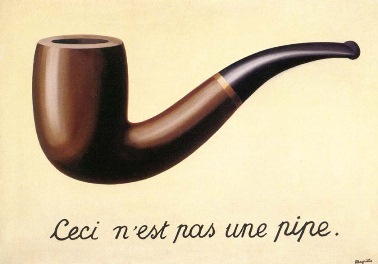
We are all made in God's image, yet we possess such diversity in our expression of that image. The analogy still holds, for a complex being like God cannot be captured in His entirety by a single image, a single human being. In His infinitude, all the billions of us who have ever existed still cannot fully capture all the ways that God can be imaged. And of course, while we may look like God when He is viewed from a certain angle, we cannot hope to be Him, any more than a picture of a pipe can be a pipe.

4 September 2015

Vignette: Mare

Evening promenade ambulations were the always the most calming. The trees lined the right and the sand on the left. The sea reached out for the shore, pursuing and receding. How many people had looked out in just this way over the centuries? Caught up in an idle thought, the germ of a reflective cascade, the bud of a mental exercise through the high-vaulted halls of philosophy.

Perhaps it takes a certain disposition to appreciate this environment. A quieter, reflective temperament with a grandiose capacity for trying to comprehend the mysteries of this world. The sentiment charmed. It repelled any thoughts of loneliness, replacing it with a profound solidarity with all those who must once have stood here, in tranquil contemplation. It was an order, implicit, a gathering of kindred spirits who meet each other not in person, in speech and actions, but in prose or verse. The records of their hearts laid bare for another sensitive soul to imbibe, empathise with, and express in yet another flourish of creativity.

On more transcendent days, it seemed that the spirit of that quiescent community was closer to the sea, the land and the sky than to any other human organisation. How many regimes, triumphs and tragedies had this sea observed? Older, older still. How many births, deaths, frustrations and elations had been absorbed into the memory of the sea? Absorbed and absolved in the sublime depths that deny any attempt at exploration. Like the subconscious of the super-consciousness of humanity, which discovers a rare listener out of every few thousand individuals, who tries to give it a voice for the next explorer. 

The exclusivity of the organisation was a source of clandestine pride, but its reality could never be certain. Perhaps such perspective was all too common, disguised in innumerable variations, lenses and distortions into the full spectrum of superficial personalities. Or perhaps it was a phantasm, an ideal borne of a romantic hope of easing isolation, one too acutely felt by asocial individuals, read into the texts and expressions of others. 

At other times, the sea lost its symbolism, snapping back to a churning body of water, unconscious, unobservant and unfeeling. It reclaimed its position as a sublime force with mastery over a presumptuous humanity. It broke its mental alliance with a callous fickleness and left the observer stranded and alone. No longer a comfort, but a font of unease.

It would not do. The observer grants his own interpretation and voice to the voiceless, and Oceanus, for all his pretences, could be neither friend nor foe to the community that personified him with recall, and attempted to co-opt into their quest for questions and answers. It was a tool, a platform from which to explore realities beyond the physical, but only as much as a mind was willing to grant it metaphysical meaning by analogies and association.

13 July 2015

A Reluctant Road

An ironic turn of events does reveal itself through the contents of my posts in recent months. When I started my creative oeuvre, it was intended to be a synthesis of all the knowledge I valued, and sensed that I wanted to include in a grand design. A world in my image, a playground of the mind, a canvas for the emotions, realm where I could create the creator and explore the implications of the rules I had set.

While writing, I researched, I thought, and my investigations began to take precedence over the actual opus itself. I had sought to reconcile multiple truths, and in that course, I found some beliefs were not worth maintaining. Veritas took precedence. Scriptio continued in ill disciplined streams.

That which I had determined to do changed. Now, the sub-creation became a vessel, centrum sapientiae scientiaeque. It had to embody the final understanding, it had to contain as much as it could possibly contain without being reality, for my perception of reality had grown to be far fuller than versatile shadow that dwelt within my soul.

I see now that I will be bound. Trapped between a journey of discovery and a process of expression, in a constant tension, I am strung. The magnum opus must concede to my own 'De Civitate Dei', 'Summa Theologiae' and 'Institutio Christianae Religionis'. Perhaps one edition will be insufficient.

1 July 2015

De Progressione Hominis

Since the age of exploration, the world has been wondering what catapulted the nations of western Europe to global dominance. We have come up with several theories, explanations for the narrative of modern history, and the fruits of those stories are evident to those who will take the time to delve further than the coasting observer. Reading the book 'Discipling Nations: The Power of Truth to Transform Cultures', I feel I finally have an answer to this enduring question which makes the most logical sense.

First, let's examine the other answers which have been submitted though, for sake of comparison. No doubt those who have lent credence will assume that my understanding of these theories from the readable books meant for the layperson are insufficient, but I ask for your toleration my amateurish philosophising. In decades past, the primary candidate for white supremacy was a biological superiority. The nations of Europe represented the cream of the human crop, the apex of evolutionary development. The Japhethites took their place in the great chain of being and had the right to exercise their ascendancy to accelerate the natural current of mother nature. We observe the terrible fruit of such a story, with hundreds of native peoples being treated as less than human, studied to determine if they represented the fabled missing link, roped into slavery and exploited as if they were included as objects of Genesis 1:28. 

The ripening of this cogitative mode was in Nazism and other similar ideologies, which seized upon the pseudoscience of nature in red tooth and claw to justify unprecedented genocides and launch a eugenics program. Now we deal with a tamed version of evolution, still distorting the way we understand the world, but not to the extreme degree which it once did. Any suggestion that human development is linked to evolutionary advantages is now met with extreme aversion, and certainly not deemed politically correct.

So now we look for alternatives, and one that had appealed to me before was suggested by Jared Diamond in 'Guns, Germs and Steel' and further elucidated by Ian Morris in 'Why the West Rules: For Now'. Their suggestions about the influence of geography and biogeography, I feel, still cannot be entirely disqualified, and have much merit. The argument, in very general brushes, is that all societies have the same baseline humans; there are no biological advantages or handicaps as a whole, and certainly not be race. It is almost the antithesis of the toxic racial theory that was once so dominant in its aversion to any mention of genetic differences among Homo sapiens.

Instead, what shaped our societies is put down to geographical differences. Europe fostered competing nation states which existed separately because of natural geographical barriers while China had long been unified because of the comparative lack of such features in the landscape. Domesticable species were far more common in the old world than the new world. The old world's horizontal axis was far more facilitative of cross pollination of ideas, inventions and trade routes than the latitudinal variation in the new world. They are really good, thoughtful books, I do recommend them.

Recently, a third perspective has helped me to understand this issue with a different take, which I figure is far more holistic than either of the last two theories. Some may take offence at the idea that biblical truth is what transforms nations and generates wealth, but the facts rather speak for themselves. Loren Cunningham's 'The Book that Transforms Nations' offers a brief overview while 'Discipling Nations' offers a heftier elucidation. This idea in essence, suggests that God intended for societies to arise, and designed them to function in a certain way. Societies that function according to those principles; such as honest government, concern for the poor, valuing individuals and so on, will thrive, in the same way that a body that is respected by being fed the right food and well exercised will be healthy. God made societies, and knows how they should work better than any of us could, and He has graciously revealed His principles for a successful society in His word. This view holds that there is an absolute truth and an absolute standard which we can either choose to abide by, or abandon.

The advantage of this view over the second is that it gives us hope. The second view is ultimately deterministic, as much of the rest of the modern cosmological evolutionary account is. It diminishes the epic turns of history and the brilliant impact of artists, inventors, scientists, entrepreneurs and missionaries on this world by attributing them, indirectly, to probabilistic chance. No doubt Newton and Leibniz both discovered calculus, but we ought to be wary of going overly fatalistic. The second view encourages us to think that nations which are underdeveloped will never be able to change, and so those who are more advanced have also diminished their sense of responsibility to share the blessings and wealth they have obtained.

What we believe about the how we relate to God and how we relate to the rest of material creation affects the attitude we have about our purpose and potential. The fact remains that the answers God has given are the only ones which enable us to see the perfect balance between divine providence and our responsibility to subdue the earth.

The stories we tell ourselves either create death, destruction and poverty or life, vibrancy and abundance. Either development or devolution in our societies. The stories we tell about our societies shape how we view the outcomes of success or failure, and the solutions we try to implement in order to pursue further prosperity.