23 January 2016

Insufficient Grace

I had been meaning to post something under this heading for quite awhile but never really got around to it. Perhaps my thoughts were not ripe. The basic germ of the original post was that God's grace is sufficient for all, but we choose to make it insufficient. Let me explain before someone brands this as 'heretical garbage'.

My pastor recently spoke on the temptation of Adam and Eve and unpacked seven verses with wonderful clarity. 

When the woman saw that the tree was good for food, and that it was a delight to the eyes, and that the tree was desirable to make one wise, she took from its fruit and ate, and she gave also to her husband with her and he ate.
Genesis 3:6

Three points were raised about how the woman decided to take the fruit. 
1. The tree was good for food.
2. It was a delight to the eyes.
3. The tree was desirable to make one wise.

Those three points reflect the three fronts on which we are tempted even today, by the ancient serpent, who, disempowered as he is, still revels in our failure to transcend these minefields. 

On the first point, the tree was good for food, the temptation is physical. The perceived benefit is a physical one, to meet a bodily need. The second front is emotional, appealing to our sense of poetic beauty and wonder in the world. The third is intellectual, appealing to the desire to be wiser, more mature, to know more.

It occurred to me that sins could be classified into these categories to some limited degree. A sin may not always be so purely motivated by weakness one of these fronts, often there is a blend, but perhaps in examples, this will be demonstrated more effectively.

Physical temptation is based around bodily need. It may be hunger, thirst, sexual appetite, feeling ill, and tired, or the need to be relieved from pain. The thing is, those who are engaging in sin for purely physical reasons are often ashamed of themselves, and prudish society tells them that they ought to be ashamed. The man or woman who cannot control their sexual appetite and engages in promiscuous activity is called a slut. One who cannot control their desire for alcohol is called a drunk, and the one who cannot control hunger for food is called a glutton. To admit to such addictions and to be controlled by such basal impulses is still, to some degree, regarded as the most embarrassing. In fact they are probably the least dangerous, once we look at the other two categories. Of course, alcoholism and liaisons are seldom solely physical, there is often an emotional tug to them as well.

The emotional temptations are based around what we feel is right, what we believe is good in a poetic sense. It appeals to that sense of poetic justice that comes when we hear a good story. Maybe it is a pair of star-crossed lovers who are separated by their warring families, and their deaths for romance's sake cause their houses to consider reconciliation. Robespierre being executed with the guillotine. Reading that the clan of Cao Cao, the Han usurper, is itself usurped by the Sima clan in short order. It is hard to pin down, that sense of artistic 'righteousness', going beyond what a general penal code can offer. Sometimes these impulses are less 'noble' in guise. It may manifest primarily in sins like envy, greed and wrath, to go with that catholic septet a little further. The mechanism of this front follows that of the lyrics: If loving you is wrong, I don't want to be right.

The last category of intellectual sins is based around our desire for control and power, mastery and achievement. It appeals to our desire to be important, significant and celebrated. By far the one sin that stands out in this regard is pride.

It seems to me that society 'respects' the sins in one order, and God treats them in just the opposite. For society, the physical sins are the most serious, the most indicative of character flaws, the most shameful, followed by 'emotional sins' which we have pretty much accepted, while intellectual sins are almost lifted up as examples to be followed. Wise philosophers and progressive scientists we call them, and give them a place of honour in our academic circles. 

When Jesus was on earth, He spent time with those who were caught up in physical sin; the tax-collectors and prostitutes, loving them tenderly, and he was at his harshest with the intellectual sins of the Pharisees. Why might this be the case?

As a generalisation, those who have physical sin are often aware of their inability to justify their actions. Their posture is more along the lines of hopelessness, and they are filled with a sense of imperfection both from comparing themselves to societal expectations and to the moral law. When confronted by the perfection of God they tell themselves that they cannot hold a candle, they acknowledge their brokenness readily.

Those who have emotionally rooted sins are a little harder to reach with the morality of God. They appeal to plurality, saying that what is right for you may not be right for me. They acknowledge that to some people their actions may appear wrong, but they don't let it affect them because they are right in their own eyes. 

Yet this is not the worst, for intellectual pride goes a step further. The proud humanistic intellectual is faced with the moral perfection of God and denies its applicability entirely. By his own reasoning he or she may even deny the very existence and relevance of God, seeking to push Him out of the picture. The intellectual claims to formulate their own moral standard or lack thereof and extends those ideas to the entirety of the human race. They are unhappy when they hear the moral standards of God being 'imposed' on others to the effect of remorse and guilt. (This is another issue entirely that is beyond the scope of this post, but the proper relationship between law and grace is detailed in Romans and guilt should not be part of the equation any longer.) The intellectual is blinded by his or her own reasoning in a crusade of their own construction.

In this day and age, with the voice of human wisdom bolder and more vocal then ever, God still whispers that His grace is enough. We are the ones who tell Him that it is not when we reject it in our pride and independence. What will we do when the torturous, humiliating crucifixion of the Son of God on the cross and His glorious triumph of a resurrection is not enough to move our hard hearts? When we convince ourselves that the wonder of the mystery of Christ is not worth examining, there can be no wonder left in anything else, and emptiness will infuse itself into our intellectual sterility.

30 November 2015

Vignette: Disillusionment

Is it fruitless to search out what is truth and falsehood? To piece together the world into a coherent picture that accommodates the collective experiences of humanity into a comprehensible whole? No sooner does one come to terms with one conundrum that another appears. In the tiresome quest for understanding, each worldview iteration encompasses more and thus when each comes crashing down, even more purpose and motivation is taken with it, all bound together, all removed to be built anew. But building is expensive, time-consuming and tiring.

To believe in nothing is my negation. To be paralysed by doubt is still to be paralysed. But what can a finite mind do against an infinite universe, with more knowledge and revelation coming day by day to revolutionise? Growing tired of revolution, reassessment and longing for stability in this world, stability to security, security to comfort. Is all comfort an illusion? The product of an idle, unchallenged mind?

7 November 2015

De Gloria Mundi

It's not often that games provoke reflection on a wider scale than the role of entertainment as a diversion in our lives, but Europa Universalis IV has provided quite a lot of munch on. 'All's fair in love and war', and now I am somewhat more acquainted with histories and causes the latter than I have been.

Of course, one cannot possibly hope to encapsulate all the intricacies of nations on anything processable by a domestic computer, even if Moore's law continues to push our limitations. EUIV however, does a much better job than most other games, notably the Civilisation series. Bringing in religion, geopolitics, dynastic struggles and colonisation, and revelling in the sheer inequality of it all.

When one begins a campaign, plans for aggrandisement and expansion help to drive the first hundred years or so of gameplay. You are put in the shoes of a ruler, and that drive to build something that will last, achieve domination and preeminence, becomes something relatable. 

Halfway through, if one plays aggressively, it is easy to become a virtual world power, maybe controlling the most trade, being a dominant land power, or unifying the lands of one culture group. The game suddenly loses steam, that drive to be the first gives way to a strange purposelessness. The player begins to wonder what was so appealing about achieving to begin with.

This sentiment of nihilistic disenchantment is exacerbated, when after thirty to forty hours of campaign time, everything ends abruptly in 1821. The game gives you a little pat on the back, and shows you the door. The sandbox gameplay has revealed how countries define their own goals based on their self interest, but in the end, when one considers all the circumstances, the entire exercise seems so futile, even detrimental. 

Thousands of lives were given to the service of the nationalistic dream, whether than dream was centred around the Valois or the Ming. Alliances are forged and broken when convenient with a perfunctory swiftness. Then as we know from history, European hegemony came crashing down, in a great destructive debacle where the flags of many empires flew for the last time over people who could no longer naively endorse the casus belli of their rulers. 

In that age is was easy to believe in the power and vision of a king, but events have conspired to deconstruct that lie. In its wake we came up with new reasons to fight, new causes to champion, new ideas to die for. The modern world has saturated itself with glories even more transient and fleeting than the legacy of the Habsburgs or Pax Britannia, and we buy into them because we need something to buy into, but Empire is so last century. I suppose it's time we turn to more eternal goals to strive for.

Sic Transit Gloria Mundi, Sed Non Transit Gloria Dei

28 October 2015

Hubris

I feel quite shaken by the level of uncertainty associated with knowledge that presents itself at a university level. After almost a semester in medicine, it has become apparent that while we write volumes on what we do know, my reference books are regularly admitting that certain mechanisms and various aetiologies of numerous conditions, esoteric and common, are rather opaque to us. There are even occasional inconsistencies between sources, which does nothing to assuage my fears that academia in general is in danger of building castles upon castles in the cloudy skies above the ivory tower.

It ought to be exciting, that we know so little, because it speaks of the possibilities out there, the research to be conducted, the potential applications and miracle cures that might present themselves upon the successful comprehension of various pathways.

Yet, it seems as though these vast unexplored regions of undiscovered knowledge have been cached in a collective wilful ignorance. Only a select few peer out over these shadowy realms and tremble at its inexhaustible expanse, the rest have come to believe that someone else always has the answers.

Perhaps it is a consequence of specialisation, coupled with the socha of modern life. Professionals want others to believe that they have all the answers, as part of earning the trust of the majority who entrust their information, assets and occasionally, their very lives to those who are likely complete strangers. Society interrogates their professionals with the question: 'You know what has to be done, right?'

Often, we can confidently answer that yes, we do know how we can help. This has unfortunately led to the perception that we have, collectively, got all the answers. That, in turn, has led to terribly high expectations and to the readiness at which we interpret mistakes as malevolent manipulation of some secret gnosis.

We want to believe that we know enough, for as the adage goes, knowledge is power. We would like to believe that we have more control over our fates than our less informed ancestors. In truth, we ought to know that we know little, that our knowledge base is vulnerable and often incomplete, and we plug ourselves into a global system that wants desperately to conceal the fragility of its foundations. How long will it be before the pride of our modernity is irrevocably shown to be a passing illusion? The sentiment of 'sic transit gloria mundi' will undoubtedly reverberate till kingdom come.

3 October 2015

De Imagine Dei

This is going to be a fairly short article on my current understanding of what it means for God to have created us in His image.

To begin, this concept is based on the Word, and blended funnily enough, with a little bit of dimensional speculation from Flatland, by A. Square.

Then God said, “Let us make man in our image, after our likeness. And let them have dominion over the fish of the sea and over the birds of the heavens and over the livestock and over all the earth and over every creeping thing that creeps on the earth.” So God created man in his own image, in the image of God he created him; male and female he created them.
- Genesis 1: 26-27 (ESV)

What is an image? In our most frequently encountered expression of images, they are two dimensional representations of something in three dimensions. By virtue of the fact that we see things from a limited perspective, we are able to represent something of three dimensions in a recognisable fashion, even through it has much less information than what the image claims to represent.

So an image is a snapshot of something complex from a limited perspective. It is a representation of something in a lower dimension that can only exist in a higher dimension. An image of a hypercube would be a cube, that of a cube, a square, and that of a square, a line, and a line, a point. Or not. 

Depending on the angle at which the image is taken, a cube can look like a hexagon or a rectangle. A scene can be viewed from a thousand perspectives. A building, whether le tour Eiffel or the Sydney opera house, have an near infinite number of possible vantage points by which they may be reduced to an image. Some may be more familiar than others, more or less conventional, close or distant.

If we are images of God, by this analysis, God must be more complex than we are. Our most distinguishing factor as human beings is that we are personal. We have the ability to form personal relationships with one another, and with God, in a way that the rest of natural creation cannot. What is a more complex version of personality? Father, Son and Holy Spirit.

Trinity is only possible in what is somehow an additional personal or spiritual dimension, which we are unaware of in the same way that A. Square could not, at first, conceive of a sphere. In order for God to explain Himself to us, He has to reduce Himself into relatively comprehensible expressions. Most directly, by dipping Himself into our dimension as Jesus Christ. As how the sphere appears as a circle in Flatland to be able to communicate in a limited way with his prophet.

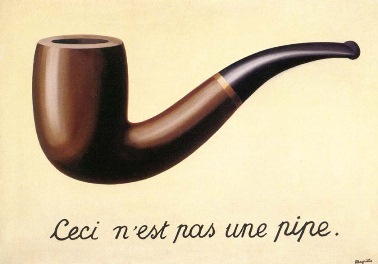
We are all made in God's image, yet we possess such diversity in our expression of that image. The analogy still holds, for a complex being like God cannot be captured in His entirety by a single image, a single human being. In His infinitude, all the billions of us who have ever existed still cannot fully capture all the ways that God can be imaged. And of course, while we may look like God when He is viewed from a certain angle, we cannot hope to be Him, any more than a picture of a pipe can be a pipe.

4 September 2015

Vignette: Mare

Evening promenade ambulations were the always the most calming. The trees lined the right and the sand on the left. The sea reached out for the shore, pursuing and receding. How many people had looked out in just this way over the centuries? Caught up in an idle thought, the germ of a reflective cascade, the bud of a mental exercise through the high-vaulted halls of philosophy.

Perhaps it takes a certain disposition to appreciate this environment. A quieter, reflective temperament with a grandiose capacity for trying to comprehend the mysteries of this world. The sentiment charmed. It repelled any thoughts of loneliness, replacing it with a profound solidarity with all those who must once have stood here, in tranquil contemplation. It was an order, implicit, a gathering of kindred spirits who meet each other not in person, in speech and actions, but in prose or verse. The records of their hearts laid bare for another sensitive soul to imbibe, empathise with, and express in yet another flourish of creativity.

On more transcendent days, it seemed that the spirit of that quiescent community was closer to the sea, the land and the sky than to any other human organisation. How many regimes, triumphs and tragedies had this sea observed? Older, older still. How many births, deaths, frustrations and elations had been absorbed into the memory of the sea? Absorbed and absolved in the sublime depths that deny any attempt at exploration. Like the subconscious of the super-consciousness of humanity, which discovers a rare listener out of every few thousand individuals, who tries to give it a voice for the next explorer. 

The exclusivity of the organisation was a source of clandestine pride, but its reality could never be certain. Perhaps such perspective was all too common, disguised in innumerable variations, lenses and distortions into the full spectrum of superficial personalities. Or perhaps it was a phantasm, an ideal borne of a romantic hope of easing isolation, one too acutely felt by asocial individuals, read into the texts and expressions of others. 

At other times, the sea lost its symbolism, snapping back to a churning body of water, unconscious, unobservant and unfeeling. It reclaimed its position as a sublime force with mastery over a presumptuous humanity. It broke its mental alliance with a callous fickleness and left the observer stranded and alone. No longer a comfort, but a font of unease.

It would not do. The observer grants his own interpretation and voice to the voiceless, and Oceanus, for all his pretences, could be neither friend nor foe to the community that personified him with recall, and attempted to co-opt into their quest for questions and answers. It was a tool, a platform from which to explore realities beyond the physical, but only as much as a mind was willing to grant it metaphysical meaning by analogies and association.